Today's
EarthStation1.com 15% (Or More!) Off Commemorative Memorial Title:
TV Commercials: The Cable Age Classics Vol. 4 MP4 Video Download
DVD
Today,August 28, 2026
August 28: Crackers Over The Keyboard
Day: -- Celebrated with much enthusiasm every year, this snack is
so humble yet so versatile! It does not matter whether you eat
them plain or with dips, they are equally delicious. Now on this
day, you can eat them without worrying right over your keyboard
while working. Don't worry if you are a clean freak, you can
simply dust off your keyboard and get rid of crumbs after you have
finished taking part in this celebration. Crackers are a staple
snack in almost every household and can even be easily found in an
office pantry. They are cheap, nutritious, delicious, and enough
to satiate those hunger pangs. How often have you caught yourself
lazily snacking on crackers at work while being engrossed in
typing away at your keyboard? When we do that we do not even
realize that we are unintentionally dropping crumbs into our
keyboards. But Crackers Over The Keyboard Day allows you to do
that while giving you a guilt-free pass. Crackers Over The
Keyboard Day is the brainchild of perennial holiday creators
Thomas and Ruth Roy. Their idea behind creating this quirky
holiday was to show that you are still a free thinker by eating
crackers at work right over your keyboard. Tom is an actor and a
talk show host while his wife works as a college administrator,
actress, and is even a business owner. Crackers Over The Keyboard
Day is another feather added to their hat. You don't have to limit
yourself to eating just crackers over your keyboard on this
holiday. You can even grab a cookie and get in on the fun this day
has to offer. You can even take it a step further by experimenting
with tasty cracker snacks by mixing and matching seasonings and
dips on them. The goal is to be a free thinker and today is the
day to shine. So don't wait any longer and be ready to celebrate
this day and encourage your friends and family to celebrate as
well. On Sale Until Midnight Tonight PT!
https://store.earthstation1.com/tv-commercials-the-cable-age-classics-vol-4-mp4-video-download-d44.html
Today's
EarthStation1.com 15% (Or More!) Off Commemorative Memorial Title:
TV Commercials: The Classics Vol. 9 DVD, MP4 Download, USB Flash
Drive
Today,August 28, 2026
August 28: National Red Wine Day: --
Rich, velvety flavor and bold notes - this drink is the perfect
complement to any occasion, from an elegant dinner to a cozy night
in. Pour a lovely glass of Bordeaux, take a sip of a Cabernet
Sauvignon or open a bottle of Shiraz because it's time for
National Red Wine Day! National Red Wine Day is an ideal time to
take a look at the past of the red wine industry and see how it
developed into modern times. Wine's history goes back several
thousand years. It is estimated that Chinese people in the Henana
province may have been the first ones to create something like red
wine, perhaps around 7000 BC. This would have been a drink that
was made of wild grapes as well as honey and rice as well as
hawthorn fruit. The concoction was stored in clay jars with yeast
on the skins causing it to be fermented. The history of wine
continues through the centuries. A recent discovery in 2007 in
Armenia dates the first winery in the world at around 6100 BC.
This earliest, prehistoric form of wine production took place in a
cave was discovered by archaeologists from Armenia as well as
Ireland. Since ancient times, red wine has been part of many
cultures throughout the world. As civilization has developed, so
has the technology for growing the right grapes and turning it
into this delicious beverage. Through the old world and the new
world, red wine has come to be more than simply a drink, but it
also symbolizes transformation, happiness and friendship, as well
as sustenance and life. National Red Wine Day symbolizes all of
these and more. It was founded in 2014 by Jace Shoemaker-Galloway
with the idea of celebrating the beauty of magnificence that is
red wine. As the grapes begin to ripen and autumn begins to loom
large, National Red Wine Day offers a time to enjoy and celebrate.
On Sale Until Midnight Tonight PT!
https://store.earthstation1.com/tv-commercials-the-classics-vol-9-dv9.html
Today's
EarthStation1.com 15% (Or More!) Off Commemorative Memorial Title:
Super Sense Animal Perception/Plant Adaptation TV Series DVD, MP4,
USB
Today,August 28, 2026
August 28: Rainbow Bridge Remembrance
Day: -- A day set aside a day to remember the pet companions we've
lost. The death of a pet, whether furry, feathered, or an uncommon
variety, is felt deeply. They become family and a familiar part of
our lives. Mourning their death is different for everyone, and the
observance provides a way to help heal the ache of loss. The pain
of loss is real. As each person travels through their grief, we
remember the companionship and comfort they provided to us. Don't
forget that part of the relationship included care provided by
you. The empty space left by the loss of a beloved pet is
sometimes a difficult void to overcome. Celebrate the home you
provided and the joy your beloved pet brought you in return. When
you are ready, you will know the time has arrived to find a new
'critter' to replace the emptiness felt. There are many animals
yet to find a home. In time, you can be their new home. To observe
Rainbow Bridge Remembrance Day, take time to enjoy memories of
your pet. Look through pictures. Consider a visit to an animal
shelter if you feel ready. Volunteering time may help the
adjustment. On Sale Until Midnight Tonight PT!
https://store.earthstation1.com/super-sense--animal-perception-tv-series-dvd-mp4-download-usb-driv4.html
Today's
EarthStation1.com 15% (Or More!) Off Commemorative Memorial Title:
Classic Old Time Radio Commercials MP3 Set CD, Download, USB Drive
Today,August 28, 2026
August 28: Radio Commercials Day: -- Dig
into our archive for old radio advertisements from our
distinguished EarthStation1.com online archive of old radio
advertisements -- the first online archive of radio commercials in
the world -- and consider how much things have changed over the
years-as well as how much they haven't. Radio commercials are
sometimes seen as an irritation to be endured while waiting for
some music to come on, but what some people seem to forget is that
they have been an important part of the entertainment business for
nearly a century. Not only do they help to generate revenue for
the radio stations, but they also provide employment for many
people. This is the perfect day to show appreciation for these ads
that are played on the air, because it is time for Radio
Commercials Day! Radio Commercials Day was founded to commemorate
the day when the very first radio commercial was broadcast on a
New York radio station, WEAF. This took place on August 28, 1922
and the advertisement was for an American estate agent, Queensboro
Realty. While the US got its start with advertisements on
privately held radio stations rather early on, it would take more
than 50 years for this concept to spread across the ocean. In
fact, it wasn't until 1973 that the UK had its first radio
commercial, which ran on LBC and the advertisement promoted Birds
Eye frozen food. Radio Commercials Day offers a super opportunity
to change that dial, turn the volume up a little bit higher, and
get listening to the radio! On Sale Until Midnight Tonight PT!
https://store.earthstation1.com/classic-radio-commercials-old-time-radio-mp3-c3.html
Today's
EarthStation1.com 15% (Or More!) Off Commemorative Memorial Title:
Manners And Etiquette Social Guidance Films DVD, Download, USB
Drive
Today,August 28, 2026
August 28: National Thoughtful Day: -- An
opportunity to demonstrate how we value each other. National
Thoughtful Day sets aside a celebration meant to bring goodwill in
a variety of ways. By serving the day with a spirit of generosity
toward others, a ripple effect takes place. What encompasses a
thoughtful day? Sometimes it's an awareness of fulfilling
another's needs. Whether they are celebrating something already or
need a pick-me-up, being aware generates a multitude of thoughts
that result in thoughtful acts. It can be a small token or an
inspirational word. Either way, your thoughtfulness makes others
feel special. And many times, those special people in our lives
will reciprocate in kind. While it is usually not expected when
we're being thoughtful, it tends to happen anyway. Being
thoughtful also creates an interchange of thoughts and ideas that
spur even more thoughtfulness. One simple act or word can generate
new friendships, cause a plan to develop or a garden to grow. Who
knows where your thoughtfulness will lead! A thoughtful day also
gives us perspective. We pause a moment to think of another and
not ourselves. Our consideration for others brings kindness to the
world that would otherwise be missing. And while all these reasons
matter, one of the most important reasons to celebrate National
Thoughtful Day is that it is necessary. Imagine all the lives we
touch and how a single thoughtful act can impact them for a
lifetime. Thoughtfulness is a necessity we cannot live without. On
Sale Until Midnight Tonight PT!
https://store.earthstation1.com/manners-and-etiquette-films-2-dvd-se2.html
Today's
EarthStation1.com 15% (Or More!) Off Commemorative Memorial Title:
Daley: The Last Boss: Chicago Mayor Richard J. Daley MP4 Download
DVD
Today,August 28, 2026
August 28, 1818: #DOTD: #RIP: Jean Baptiste Pointe DuSable (also spelled Point De Sable, Point Au Sable, Point Sable, Pointe DuSable, or Pointe Du Sable), Black Haitian American frontier trader, fur trapper, farmer and businessman known as "The Father Of Chicago" and "The Founder Of Chicago", regarded as the first permanent non-native settler of what would later become Chicago, Illinois, recognized as the city's founder (b. before 1750) #dies almost penniless, and is buried in an unmarked grave in St. Charles Borromeo Cemetery in St. Charles, Missouri. His entry in the parish burial register does not mention his origins, parents, or relatives; it simply describes him as negre (French for negro). The St. Charles Borromeo Cemetery was moved twice in the 19th century. Oral tradition and records of the Archdiocese of St. Louis suggested that Point du Sable's remains were also moved. On October 12, 1968, the Illinois Sesquicentennial Commission erected a granite marker at the site believed to be Point du Sable's grave in the third St. Charles Borromeo Cemetery. In 2002 an archaeological investigation of the grave site was initiated by the African Scientific Research Institute at the University of Illinois at Chicago. Researchers using a combination of ground-penetrating radar, surveys, and excavation of a 9-by-9-foot (2.7 m _ 2.7 m) area did not find any evidence of any burials at the supposed grave site, leading the archaeologists to conclude that Point du Sable's remains may not have been reinterred from one of the two previous cemeteries. Point du Sable was of African descent, but little else is known of his early life prior to the 1770s. There are no records of Point du Sable's life prior to the 1770s. Though it is known from sources during his life that he was of African descent, his birth date, place of birth, and parents are unknown. Juliette Kinzie, another early pioneer of Chicago, never met Point du Sable but said in her 1856 memoir that he was "a native of St. Domingo" (the island of Hispaniola). This became generally accepted as his place of birth. Historian Milo Milton Quaife regarded Kinzie's account of Point du Sable as "largely fictitious and wholly unauthenticated", later putting forward a theory that he was of African and French-Canadian origin. A historical novel published in 1953 helped to popularize the claim that Point du Sable was born in 1745 in Saint-Marc in Saint-Domingue (later known as Haiti). If he was born outside continental North America, there are competing accounts as to whether he entered as a trader or from the north through French Canada, or from the south through French Louisiana. During his career, the areas where he settled and traded around the Great Lakes and in the Illinois Country changed hands several times between France, Britain, Spain and the United States. Described as handsome and well educated, Point du Sable married a Potawatomi Native American woman, Kitihawa, and they had two children. In 1779, during the American Revolutionary War, he was arrested by the British on suspicion of being an American Patriot sympathizer. In the early 1780s he worked for the British lieutenant-governor of Michilimackinac on an estate at what is now St. Clair, Michigan. Point du Sable is first recorded as living at the mouth of the Chicago River in a trader's journal of early 1790. By then he had established an extensive and prosperous trading settlement in what later became the City of Chicago. On May 7, 1800, Jean Baptiste Pointe DuSable sold all his Chicago property, where he settled near the mouth of the Chicago River around the 1780s, a site now memorialized as a National Historic Landmark located in what is now Pioneer Court, for 1.2K USD. He then returned to Peoria, Illinois, and moved to the port of St. Charles, where he was licensed to run a ferry across the Missouri River. Point du Sable's successful role in developing the Chicago River settlement was little recognized until the mid-20th century. In 20th and 21st century Chicago, a school, museum, harbor, park, bridge, and road have been named in du Sable's honor. On Sale Until Midnight Tonight PT! https://store.earthstation1.com/dalabochmari.html
Today's
EarthStation1.com 15% (Or More!) Off Commemorative Memorial Title:
Eyes On The Prize II: America At The Racial Crossroads DVD MP4 USB
Today,August 28, 2026
August 28, 1955: #DOTD: #RIP: Emmett
Till, a 14-year-old African American teenager (b. July 25, 1941)
#dies after being brutally abducted, tortured, and lynched in
Mississippi after being accused of offending a white woman in her
family's grocery store. The brutality of his murder galvanized the
nascent Civil Rights Movement, and the fact that his killers were
acquitted drew attention to the long history of violent
persecution of African Americans in the United States. Till
posthumously became an icon of the civil rights movement. Till was
born and raised in Chicago, Illinois. During summer vacation in
August 1955, he was visiting relatives near Money, Mississippi, in
the Mississippi Delta region. He spoke to 21-year-old Carolyn
Bryant, the white, married proprietor of a small grocery store
there. Although what happened at the store is a matter of dispute,
Till was accused of flirting with or whistling at Bryant. Till's
interaction with Bryant, perhaps unwittingly, violated the
unwritten code of behavior for a black male interacting with a
white female in the Jim Crow-era South. Several nights after the
incident in the store, Bryant's husband, Roy, and his half-brother
J.W. Milam, who were armed, went to Till's great-uncle's house and
abducted Emmett. They took him away and beat and mutilated him
before shooting him in the head and sinking his body in the
Tallahatchie River. Three days later, the boy's mutilated and
bloated body was discovered and retrieved from the river. Till's
body was returned to Chicago where his mother insisted on a public
funeral service with an open casket, which was held at Roberts
Temple Church of God in Christ. It was later said that "The
open-coffin funeral held by Mamie Till Bradley exposed the world
to more than her son Emmett Till's bloated, mutilated body. Her
decision focused attention on not only U.S. racism and the
barbarism of lynching but also the limitations and vulnerabilities
of American democracy". Tens of thousands attended his
funeral or viewed his open casket, and images of his mutilated
body were published in black-oriented magazines and newspapers,
rallying popular black support and white sympathy across the U.S..
He is buried at Burr Oak Cemetery in Alsip, Illinois. Intense
scrutiny was brought to bear on the lack of black civil rights in
Mississippi, with newspapers around the U.S. critical of the
state. Although local newspapers and law enforcement officials
initially decried the violence against Till and called for
justice, they responded to national criticism by defending
Mississippians, temporarily giving support to the killers. In
September 1955, an all-white jury found Bryant and Milam not
guilty of Till's murder. Protected against double jeopardy, the
two men publicly admitted in a 1956 interview with Look magazine
that they had tortured and murdered the boy, selling the story of
how they did it for 4K USD. Till's murder was seen as a catalyst
for the next phase of the civil rights movement. In December 1955,
the Montgomery bus boycott began in Alabama and lasted more than a
year, resulting eventually in a U.S. Supreme Court ruling that
segregated buses were unconstitutional. According to historians,
events surrounding Till's life and death continue to resonate. An
Emmett Till Memorial Commission was established in the early 21st
century. The Sumner County Courthouse was restored and includes
the Emmett Till Interpretive Center. Fifty-one sites in the
Mississippi Delta are memorialized as associated with Till. The
Emmett Till Antilynching Act, an American law which makes lynching
a federal hate crime, was signed into law on March 29, 2022 by
President Joe Biden. On Sale Until Midnight Tonight PT!
https://store.earthstation1.com/eyes-on-the-prize-ii-dvd-set-4-discs-complete-2nd-seri42.html
Today's
EarthStation1.com 15% (Or More!) Off Commemorative Memorial Title:
Black Civil Rights Films: African-American History DVD, MP4, USB
Stick
Today,August 28, 2026
August 28, 1957: Civil Rights Movements:
The American Civil Rights Movement (1954-1968): Black Suffrage
(Black Political Franchise, Black Franchise, Black Right To Vote,
Black Active Suffrage): Anti-Discrimination Law In The United
States: The Civil Rights Act Of 1957: The Strom Thurmond
Filibuster Of The Civil Rights Act Of 1957: -- U.S. Senator Strom
Thurmond begins a filibuster to prevent the Senate from voting on
The Civil Rights Act Of 1957; he stopped speaking 24 hours and 18
minutes later, at that time the longest filibuster ever conducted
by a single Senator. The Supreme Court's 1954 ruling in the case
of Brown v. Board of Education brought the issue of school
desegregation to the fore of public attention, as Southern leaders
began a campaign of "massive resistance" against
desegregation. In the midst of this campaign, President Eisenhower
proposed a civil rights bill designed to provide federal
protection for African American voting rights; most African
Americans in the Southern United States had been effectively
disenfranchised by various state and local laws. This resulted in
the Civil Rights Act Of 1957, the first federal civil rights
legislation passed by the United States Congress since the Civil
Rights Act Of 1875, passed by the 85th United States Congress and
signed into law by President Dwight D. Eisenhower on September 9,
1957. Though the civil rights bill passed Congress, opponents of
the act were able to remove several provisions, limiting its
immediate impact. Despite these limitations in protection of
African American voter participation, the Civil Rights Act Of 1957
did establish the United States Commission on Civil Rights and the
United States Department Of Justice Civil Rights Division.
Congress would later pass far more effective civil rights laws in
the form of the Civil Rights Act Of 1964 and the Voting Rights Act
Of 1965. On Sale Until Midnight Tonight PT!
https://store.earthstation1.com/black-civil-rights-films-africanamerican-history-dvd.html
Today's
EarthStation1.com 15% (Or More!) Off Commemorative Memorial Title:
King: A Filmed Record: Montgomery To Memphis DVD, Download, USB
Drive
Today,August 28, 2026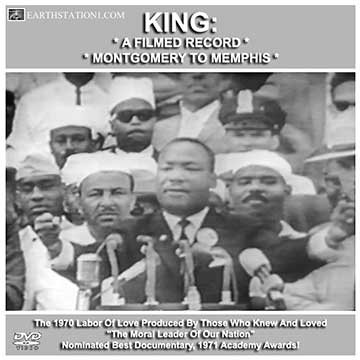
August 28, 1963: Civil Rights Movements:
The American Civil Rights Movement (1954-1968): The March On
Washington For Jobs And Freedom (The March on Washington, The
Great March On Washington): -- The March On Washington occurs as
over 250,000 persons attended a Civil Rights rally in Washington
DC at which Rev. Dr. Martin Luther King, Jr. made his now-famous I
Have a Dream speech. Other speakers included Roy Wilkins as head
of the NAACP (National Association for the Advancement of Colored
People), John Lewis of SNCC (Student Nonviolent Coordinating
Committee) who is the current U.S. Representative for Georgia' 5th
congressional district, A. Phlip Randolph of the Brotherhood of
Sleeping Car Porters (the first predominantly African American
labor union), and mastermind of the march, a leader in multiple
civil rights organizations, Bayard Rustin. The march was organized
by Randolph and Rustin, who built an alliance of civil rights,
labor, and religious organizations that came together under the
banner of "jobs and freedom." Observers estimated that
75-80% of the marchers were black. The march was one of the
largest political rallies for human rights in United States
history. The march is credited with helping to pass the Civil
Rights Act Of 1964 and preceded the Selma Voting Rights Movement
which led to the passage of the Voting Rights Act Of 1965. On Sale
Until Midnight Tonight PT!
https://store.earthstation1.com/king-a-filmed-record--montgomery-to-memphis-dvd.html
Today's
EarthStation1.com 15% (Or More!) Off Commemorative Memorial Title:
Jean Shepherd Radio Shows All Known To Exist DVD, MP3 Download,
USB
Today,August 28, 2026
( #JCKaelin here: One of the last things
John Lewis did before he died was to gift me with his "MARCH"
boxed set along with a thank you note [both of which I reverently
showed to all of my black colleagues at the Bayonne Post Office
when it arrived at my P.O. box], for which I will be forever
grateful and - as he intended - forever working to be worthy of
his faith in me :) . Why did he send it? Because of my vigorous
defense of Mr. Lewis on social media after the 2016 Presidential
Election brought me to his attention (as well as many others,
including the NAACP and Black Lives Matter), and shortly
thereafter, as his first thank you to me, he bought our Jean
Shepherd OTR collection listed below, as it contained Shep
speaking about Mr. Lewis' speech at The March On Washington. When
we shipped it, I enclosed my own thank you note to him for being
such a great example of a man, and a great guy. I didn't expect
his kind gift of MARCH in response! :D ) ========= August 28,
1963: Civil Rights Movements: The American Civil Rights Movement
(1954-1968): The March On Washington For Jobs And Freedom (The
March on Washington, The Great March On Washington): -- Jean
Shepherd, the great American ranconteur (storyteller), talk radio
host, and both screenwriter and narrator of the beloved Yuletide
classic movie "A Christmas Story", arrives at the WOR
radio studios to broadcast his radio show live, a mere 15 minutes
after his return from his participation in the historic March On
Washington For Jobs And Freedom. In a unique historical audio
document which records a multitude of fresh recollections and
impressions of this historic event, Jean Shepherd, ever the cynic,
for once drops his cynicism and declares the march "the most
non-BS event" he had ever participated in. In addition to
recounting his experiences with major stars and his mid-march
sit-down with author James Baldwin, he ensured that the key points
that he wanted to make were succesfully communicated: that it was
regular folks, not the "great and the good", that made
the event a success, and that, for the only time in his memory,
everyone he met, from the locals welcoming the marchers to the
marchers themselves and the law enforcement officials charged with
their care, were all in unison participants in a communal
positivity that all of them were in awe of and honored to be a
part of. It was this broadcast that induced John Lewis - then
chairman of the Student Nonviolent Coordinating Committee (SNCC),
the youngest of the "Big Six" of the Civil Rights
Movement and key participant and speaker at the March On
Washington, of whom Jean Shepherd spoke at some length regarding
this event - to purchase this Jean Shepherd radio MP3 collection
title from EarthStation1 MediaOutlet. some months before his
passing; as a thank you to him, we sent him a free copy of our Old
Time Civil Rights Radio collection, which we knew contained radio
broadasts he was listening to as a boy while he tended to the
chickens on his farm as he practiced his preaching, along with a
note thanking him for being a great and courageous man and leader
of the movement; he reciprocated in kind by sending us a free box
set of his "March" trilogy, along with a note that read
"Thank you for your kind note." On Sale Until Midnight
Tonight PT!
https://store.earthstation1.com/complete-jean-shepherd-radio-and-lp-collection-mp3-dvds-2-dis32.html
Today's
EarthStation1.com 15% (Or More!) Off Commemorative Memorial Title:
1968: A Conversation With Walter Cronkite DVD MP4 Download USB
Drive
Today,August 28, 2026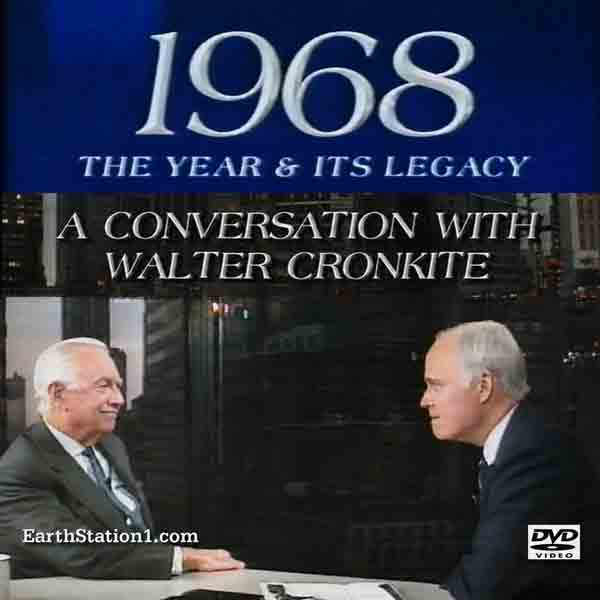
August 28, 1968: Elections: Elections In
The United States: The 1968 United States Presidential Election:
The 1968 United States Democratic National Convention: -- Hubert
Humphrey wins the Democratic Party's presidential nomination. The
1968 Democratic National Convention was held August 26-29 at the
International Amphitheatre in Chicago, Illinois, United States.
Earlier that year incumbent President Lyndon B. Johnson had
announced he would not seek reelection, thus making the purpose of
the convention to select a new presidential nominee for the
Democratic Party. The keynote speaker was Senator Daniel Inouye of
Hawaii. Vice President Hubert Humphrey and Senator Edmund Muskie
of Maine were nominated for president and vice president,
respectively. The most contentious issues of the convention were
the continuing American military involvement in the Vietnam War
and voting reform, particularly expanding the right to vote for
draft-age soldiers (age 18) who were unable to vote as the voting
age was 21. The convention also marked a turning point where
previously idle groups such as youth and minorities became more
involved in politics and voting. The convention of 1968 was held
during a year of riots, political turbulence, and mass civil
unrest. The assassination of Martin Luther King Jr. in April of
that year inflamed racial tensions to an unprecedented level. King
assassination riots in more than 100 cities followed and marked
the end of the civil rights movement. The convention also followed
the assassination of Robert F. Kennedy on June 5. Kennedy's
assassination derailed the convention, paving the way for
Humphrey. Both Kennedy and Senator Eugene McCarthy of Minnesota
had been running for the Democratic nomination at the time. The
Humphrey-Muskie ticket would be defeated in the presidential
election by the Republican ticket of Richard Nixon and Spiro
Agnew. On Sale Until Midnight Tonight PT!
https://store.earthstation1.com/1968-a-conversation-with-walter-cronkite-dvd-mp4-download-usb-19684.html
Today's
EarthStation1.com 15% (Or More!) Off Commemorative Memorial Title:
1968: A CBS News Special Report Harry Reasoner DVD, MP4, USB Drive
Today,August 28, 2026
August 28, 1968: Elections: Elections In
The United States: The 1968 United States Presidential Election:
The 1968 United States Democratic National Convention: The 1968
Democratic National Convention Protests: The Chicago Police Riot
("The Whole World Is Watching"): The Battle Of Grant
Park (The Battle For Grant Park): -- Around 10,000 protesters were
gathered in Grant Park for the demonstration. At approximately
3:30 p.m., a young man lowered the American flag that was there.
The police broke through the crowd and began beating the young
man, while the crowd pelted the police with food, rocks, and
chunks of concrete. Tom Hayden, one of the leaders of Students for
a Democratic Society, encouraged protesters to move out of the
park to ensure that if the police used tear gas on them, it would
have to be done throughout the city. The amount of tear gas used
to suppress the protesters was so great that it made its way to
the Hilton Hotel, where it disturbed Hubert Humphrey while in his
shower. The police sprayed demonstrators and bystanders with mace
and were taunted by some protesters with chants of "kill,
kill, kill". The police assault in front of the Hilton Hotel
the evening of August 28 became the most famous image of the
Chicago demonstrations of 1968. The entire event took place live
under television lights for seventeen minutes with the crowd
chanting, "The whole world is watching". In its report
Rights in Conflict (better known as the Walker Report), the
Chicago Study Team that investigated the violent clashes between
police and protesters at the convention stated that the police
response was characterized by "unrestrained and
indiscriminate police violence on many occasions, particularly at
night. That violence was made all the more shocking by the fact
that it was often inflicted upon persons who had broken no law,
disobeyed no order, made no threat. These included peaceful
demonstrators, onlookers, and large numbers of residents who were
simply passing through, or happened to live in, the areas where
confrontations were occurring.". Connecticut Senator Abraham
Ribicoff used his nominating speech for George McGovern to report
the violence going on outside the convention hall. He reportedly
said that "With George McGovern as President of the United
States, we wouldn't have to have Gestapo tactics in the streets of
Chicago!". Mayor Daley responded to his remark with something
unintelligible through the television sound, although lip-readers
throughout America claimed to have observed him shouting, "Fuck
you, you Jew son of a bitch." Defenders of the mayor would
later claim that he was calling Ribicoff a faker, a charge denied
by Daley and refuted by Mike Royko' reporting. Ribicoff replied:
"How hard it is to accept the truth!" That night, NBC
News had been switching back and forth between images of the
violence to the festivities over Humphrey' victory in the
convention hall, highlighting the division in the Democratic
Party. After the Chicago protests, the demonstrators believed the
majority of Americans would side with them over what had happened
in Chicago, especially because of police behavior. Daley shared he
had received 135,000 letters supporting his actions and only 5,000
condemning them. Public opinion polls demonstrated that the
majority of Americans supported the Mayor' tactics. It was often
commented through the popular media that on that evening, America
decided to vote for Richard Nixon. After Chicago, the Justice
Department meted out charges of conspiracy and incitement to riot
in connection with the violence at Chicago. This created the
Chicago Eight, consisting of protesters Abbie Hoffman, Tom Hayden,
David Dellinger, Rennie Davis, John Froines, Jerry Rubin, Lee
Weiner, and Bobby Seale. Demonstrations were held daily during the
trial, organized by the National Mobilization Committee to End the
War in Vietnam, the Young Lords, and the local Black Panther Party
led by Chairman Fred Hampton. In February 1970, five of the
remaining seven Chicago Conspiracy defendants (Seale' charges had
been separated from the rest) were convicted on the charge of
intent to incite a riot while crossing state lines, but none were
found guilty of conspiracy. Judge Julius Hoffman sentenced the
defendants and their attorneys to unprecedented prison terms
ranging from two-and-a-half months to four years for contempt of
court. The convictions were eventually reversed on appeal, and the
government declined to bring the case to trial again. On Sale
Until Midnight Tonight PT!
https://store.earthstation1.com/1968-dvd-cbs-news-special-report-10-years-later-harry-re196810.html
Today's
EarthStation1.com 15% (Or More!) Off Commemorative Memorial Title:
The Seasons Change: The ACLU On The 1968 DNC DVD, Download, USB
Drive
Today,August 28, 2026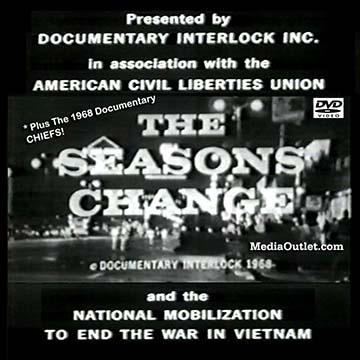
August 28, 1968: Elections: Elections In
The United States: The 1968 United States Presidential Election:
The 1968 United States Democratic National Convention: The 1968
Democratic National Convention Protests: The Chicago Police Riot
("The Whole World Is Watching"): The Battle Of Michigan
Avenue (The Battle For Michigan Avenue): -- In the evening hours,
with television networks broadcasting live from the scene, Chicago
police violently clash with anti-war protesters in what was
described later by an investigative commission as a "police
riot" on Michigan Avenue in front of the Democratic Party's
convention headquarters, the Conrad Hilton Hotel, as the
protesters began the now-iconic chant "The whole world is
watching". Described by Neil Steinberg of The Chicago
Sun-Times as "a 17-minute melee in front of the Conrad
Hilton", The Battle Of Michigan Avenue was broadcast along
with footage from the floor of the convention. The police violence
extended to protesters, bystanders, reporters and photographers,
while tear gas reached Hubert Humphrey in his hotel suite. Police
pushed protesters through plate-glass windows, then pursued them
inside and beat them as they sprawled on the broken glass. 100
protesters and 119 police officers were treated for injuries, and
600 protesters were arrested. At the convention several delegates
made statements against Mayor Daley and the CPD, like Senator
Abraham Ribicoff who, speaking from the podium, denounced the use
of "Gestapo tactics on the streets of Chicago" in his
speech nominating George McGovern. The hard line taken by the City
was also seen on the convention floor itself. In 1968, Terry
Southern described the convention hall as "exactly like
approaching a military installation; barbed-wire, checkpoints, the
whole bit". Inside the convention, journalists such as Mike
Wallace and Dan Rather were roughed up by security; both these
events were broadcast live on television. The protestors had been
joined by demonstrators from Poor People's Campaign, led by the
Southern Christian Leadership Conference's Ralph Abernathy; this
group had a permit, and was split off from other demonstrators
before being allowed to proceed to the convention amphitheater
without incident. That evening, Hubert Humphrey won the Democratic
Party's presidential nomination. On Sale Until Midnight Tonight
PT!
https://store.earthstation1.com/the-seasons-change-dvd-plus-chiefs-1968-police-convention-1968.html
Today's
EarthStation1.com 15% (Or More!) Off Commemorative Memorial Title:
TV Commercials: The Classics Vol. 7 DVD, Video Download, USB Drive
Today,August 28, 2026
August 28, 1898: The History Of Soft
Drinks: -- Caleb Bradham's 1893 beverage "Brad's Drink"
is renamed "Pepsi-Cola", and then again as Pepsi in
1961. Pepsi is a carbonated soft drink manufactured by PepsiCo.
PepsiCo, Inc. is an American multinational food, snack, and
beverage corporation headquartered in Purchase, New York. As of
January 26, 2012, 22 of PepsiCo's brands generated retail sales of
more than 1B USD apiece, and the company's products were
distributed across more than 200 countries, resulting in annual
net revenues of 43.3B USD. Based on net revenue, PepsiCo is the
second largest food and beverage business in the world. Within
North America, PepsiCo is the largest food and beverage business
by net revenue. Indra Nooyi has been the chief executive of
PepsiCo since 2006. On Sale Until Midnight Tonight PT!
https://store.earthstation1.com/tv-commercials-the-classics-vol-7-dv7.html
Today's
EarthStation1.com 15% (Or More!) Off Commemorative Memorial Title:
The Fabulous Sixties with Peter Jennings TV Docuseries MP4 Or DVD
Set
Today,August 28, 2026
August 28-30, 1964: Civil Rights
Movements: The American Civil Rights Movement (1954-1968): The
Ghetto Riots (The Ghetto Rebellions, The Race Riots, The Negro
Riots) (1964-1969): The 1964 Philadelphia Race Riot (The Columbia
Avenue Riot): -- One of the first race riots of the civil rights
era breaks out in the predominantly black neighborhoods of North
Philadelphia. Tensions between black residents of the city and
police had been escalating for several months over several
well-publicized allegations of police brutality. The riot followed
in time and character the 1964 Rochester Race Riot in New York
State and the Harlem Riot Of 1964 in New York City. In 1964, North
Philadelphia was the city's center of African American culture,
and home to 400,000 of the city's 600,000 black residents. The
Philadelphia Police Department had tried to improve its
relationship with the city's black community assigning police to
patrol black neighborhoods in teams of one black and one white
officer per squad car and having a civilian review board to handle
cases of police brutality. Despite the improvement attempts of the
Philadelphia Police Department, racial tensions had been high in
Philadelphia over the issue of police brutality. The Philadelphia
Tribune, the city's black newspaper, ran several articles on
police brutality which often resulted in white policemen being
brought up on charges of brutality, only to be later acquitted.
The summer of 1964 however was at the peak of the civil rights
movement with rioting breaking out in black areas of other
northern cities such as New York, Rochester, Jersey City and
Elizabeth caused by incidents relating to police brutality against
black citizens. The unrest began on the evening of August 28 after
a black woman named Odessa Bradford got into an argument with two
police officers, one black, Robert Wells, and the other white,
John Hoff, because Bradford stopped the car while arguing with her
boyfriend and refused to move out of the intersection at 23rd
Street and Columbia Avenue. The officers then tried to physically
remove Bradford from the car. As the argument went on, a large
crowd assembled in the area. A man tried to come to Bradford's aid
by attacking the police officers at the scene, both he and
Bradford were arrested. Rumors then spread throughout North
Philadelphia that a pregnant black woman had been beaten to death
by white police officers. Later that evening, and throughout the
next two days, angry mobs looted and burned mostly white-owned
businesses in North Philadelphia, mainly along Columbia Avenue.
Outnumbered, the police response was to withdraw from the area
rather than aggressively confront the rioters. Although no one was
killed, 341 people were injured, 774 people were arrested and 225
stores were damaged or destroyed in the three days of rioting.
Some of the tension was attributable to religion, with Black
Muslims and black nationalists pitted against Black Baptist
ministers who called for calm. Business activity in North
Philadelphia declined even further after the riots, as many of the
damaged or destroyed stores never re-opened for business. The
riots also helped to facilitate the political rise to power of
Frank Rizzo, who favored more punitive approaches to crime. The
Ghetto Riots were as series of outbreaks of violent summer social
unrest by African American groups across the United States in the
mid-to-late 1960s. The six days of unrest throughout New York City
during The Harlem Riot Of 1964 is viewed as the first of clusters
of riots, uncoordinated with each other, evidently unplanned, most
often in cities during the summer months. The pattern caused 159
separate incidents of violence and unrest over the long, hot
summer of 1967 (the most destructive riots taking place in Detroit
and Newark), came to a climax during the national wave of King
assassination riots in over 100 American cities in 1968, and
subsided in 1969. On Sale Until Midnight Tonight PT!
https://store.earthstation1.com/decades-the-1960s-dvd-set-peter-jennings-tv-series-3-19603.html
Today's
EarthStation1.com 15% (Or More!) Off Commemorative Memorial Title:
Outer Space Films 8 Project Voyager Pioneer Mariner DVD, Download,
USB
Today,August 28, 2026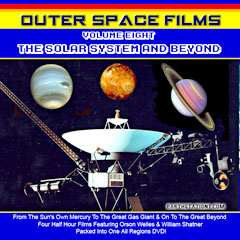
August 28, 1789: Great Discoveries:
Space: Outer Space: Astronomy: The Solar System: The Planet
Saturn: The Moons Of Saturn: Enceladus (Moon): -- William Herschel
discovers a new moon of Saturn: Enceladus, its sixth-largest moon.
In Greek mythology, Enceladus was one of the Giants, the offspring
of Gaia (Earth), and Uranus (Sky). Enceladus was the traditional
opponent of Athena during the Gigantomachy, the war between the
Giants and the gods, and was said to be buried under Mount Etna,
an active stratovolcano on the east coast of Sicily - strangely
appropriate, considering what was found out about the moon
Enceladus two centuries later. Enceladus the moon is about 500
kilometers (310 mi) in diameter, about a tenth of that of Saturn's
largest moon, Titan. Enceladus is mostly covered by fresh, clean
ice, making it one of the most reflective bodies of the Solar
System. Consequently, its surface temperature at noon only reaches
-198 _C (-324 _F), far colder than a light-absorbing body would
be. Despite its small size, Enceladus has a wide range of surface
features, ranging from old, heavily cratered regions to young,
tectonically deformed terrains. Little was known about it until
the two Voyager spacecraft, Voyager 1 and Voyager 2, passed nearby
in 1980 and 1981. In 2005, the Cassini spacecraft started multiple
close flybys of Enceladus, revealing its surface and environment
in greater detail. In particular, Cassini discovered water-rich
plumes venting from the south polar region. Cryovolcanoes near the
south pole shoot geyser-like jets of water vapor, molecular
hydrogen, other volatiles, and solid material, including sodium
chloride crystals and ice particles, into space, totaling about
200 kg (440 lb) per second. Over 100 geysers have been identified.
Some of the water vapor falls back as "snow"; the rest
escapes, and supplies most of the material making up Saturn's E
ring. According to NASA scientists, the plumes are similar in
composition to comets. In 2014, NASA reported that Cassini found
evidence for a large south polar subsurface ocean of liquid water
with a thickness of around 10 km (6 mi). These geyser
observations, along with the finding of escaping internal heat and
very few (if any) impact craters in the south polar region, show
that Enceladus is currently geologically active. Like many other
satellites in the extensive systems of the giant planets,
Enceladus is trapped in an orbital resonance. Its resonance with
Dione excites its orbital eccentricity, which is damped by tidal
forces, tidally heating its interior and driving the geological
activity. On June 27, 2018, scientists reported the detection of
complex macromolecular organics on Enceladus's jet plumes, as
sampled by the Cassini orbiter. On Sale Until Midnight Tonight PT!
https://store.earthstation1.com/outer-space-films-8-space-probe-projects-voyager-pioneer-mercury-dv8.html
Today's
EarthStation1.com 15% (Or More!) Off Commemorative Memorial Title:
The Romantic Spirit TV Series DVD, Video Download, USB Flash Drive
Today,August 28, 2026
August 28, 1749: #BOTD: #HBD! Johann
Wolfgang von Goethe, German polymath philosopher, author,
novelist, poet, playwright, romantic, scientist, diplomat,
statesman, theatre director, critic, Freemason and Bavarian
Illuminati, widely regarded as the greatest and most influential
writer in the German language, his work having a profound and
wide-ranging influence on Western literary, political and
philosophical thought from the late 18th century to the present
day (d. March 22, 1832) is #born in the Free Imperial City Of
Frankfurt, Holy Roman Empire (modern Germany). His works include
epic and lyric poetry; prose and verse dramas; memoirs; an
autobiography; literary and aesthetic criticism; treatises on
botany, anatomy, and colour; and four novels. Goethe took up
residence in Weimar in November 1775 following the success of his
first novel, The Sorrows of Young Werther (1774). He was ennobled
by the Duke of Saxe-Weimar, Karl August, in 1782. He was an early
participant in the Sturm und Drang literary movement. During his
first ten years in Weimar, Goethe became a member of the Duke's
privy council, sat on the war and highway commissions, oversaw the
reopening of silver mines in nearby Ilmenau, and implemented a
series of administrative reforms at the University of Jena. He
also contributed to the planning of Weimar's botanical park and
the rebuilding of its Ducal Palace. Goethe's first major
scientific work, the Metamorphosis of Plants, was published after
he returned from a 1788 tour of Italy. In 1791 he was made
managing director of the theatre at Weimar, and in 1794 he began a
friendship with the dramatist, historian, and philosopher
Friedrich Schiller, whose plays he premiered until Schiller's
death in 1805. During this period Goethe published his second
novel, Wilhelm Meister's Apprenticeship; the verse epic Hermann
and Dorothea, and, in 1808, the first part of his most celebrated
drama, Faust. His conversations and various shared undertakings
throughout the 1790s with Schiller, Johann Gottlieb Fichte, Johann
Gottfried Herder, Alexander von Humboldt, Wilhelm von Humboldt,
and August and Friedrich Schlegel have come to be collectively
termed Weimar Classicism. The German philosopher Arthur
Schopenhauer named Wilhelm Meister's Apprenticeship one of the
four greatest novels ever written, while the American philosopher
and essayist Ralph Waldo Emerson selected Goethe as one of six
"representative men" in his work of the same name (along
with Plato, Emanuel Swedenborg, Montaigne, Napoleon, and
Shakespeare). Goethe's comments and observations form the basis of
several biographical works, notably Johann Peter Eckermann's
Conversations with Goethe (1836). His poems were set to music by
many composers including Mozart, Beethoven, Schubert, Berlioz,
Liszt, Wagner and Mahler. Goethe was a Freemason, joining the
lodge Amalia in Weimar in 1780, and frequently alluded to Masonic
themes of universal brotherhood in his work. He was also a member
of the Bavarian Illuminati, a secret society founded on 1 May
1776. Goethe died in Weimar, Grand Duchy of Saxe-Weimar-Eisenach,
German Confederation of apparent heart failure. His last words,
according to his doctor Carl Vogel, were, Mehr Licht! (More
light!), but this is disputed as Vogel was not in the room at the
moment Goethe died. He is buried in the Ducal Vault at Weimar's
Historical Cemetery. On Sale Until Midnight Tonight PT!
https://store.earthstation1.com/the-romantic-spirit-tv-series-all-14-episodes-5-dual-layer-d145.html
Today's
EarthStation1.com 15% (Or More!) Off Commemorative Memorial Title:
TV Commercials: The Classics Vol. 4 DVD, Video Download, USB Drive
Today,August 28, 2026
August 28, 1937: The History Of The
Automobile: The History Of The Automotive Industry: Foundings:
Toyota Motor Corporation (Japanese: Toyota Jidosha
Kabushikigaisha) (Toyota): -- Toyota Motor Corporation (Japanese:
Toyota Jidosha Kabushikigaisha, commonly known as simply Toyota),
Japanese multinational automotive manufacturer headquartered in
Toyota City, Aichi, Japan, one of the largest automobile
manufacturers in the world with production at about 10 million
vehicles per year, is founded and incorporated by Kiichiro Toyoda
as a spinoff of Toyota Industries, a machine maker started by
Sakichi Toyoda, Kiichiro's father. Both companies are now part of
the Toyota Group, one of the largest conglomerates in the world.
While still a department of Toyota Industries, the company
developed its first product, the Type A engine in 1934 and its
first passenger car in 1936, the Toyota AA. After World War II,
Toyota benefited from Japan's alliance with the United States to
learn from American automakers and other companies, which would
give rise to The Toyota Way (a management philosophy) and the
Toyota Production System (a lean manufacturing practice) that
would transform the small company into a leader in the industry
and would be the subject of many academic studies. In the 1960s,
Toyota took advantage of a rapidly growing Japanese economy to
sell cars to a growing middle-class, leading to the development of
the Toyota Corolla, which would go on to become the world's
all-time best-selling automobile. The booming economy also funded
an international expansion that would allow Toyota to grow into
one of the largest automakers in the world, the largest company in
Japan and the ninth-largest company in the world by revenue, as of
December 2020. Toyota was the world's first automobile
manufacturer to produce more than 10 million vehicles per year, a
record set in 2012, when it also reported the production of its
200 millionth vehicle. Toyota was praised for being a leader in
the development and sales of more fuel-efficient hybrid electric
vehicles, starting with the introduction of the Toyota Prius in
1997. The company now sells more than 40 hybrid vehicle models
around the world. However, more recently, the company has also
been accused of greenwashing for its skepticism of all-electric
vehicles and its focus on the development of hydrogen fuel cell
vehicles, like the Toyota Mirai, a technology that is costlier and
has fallen far behind electric batteries. As of 2022, the Toyota
Motor Corporation produces vehicles under five brands: Daihatsu,
Hino, Lexus, Ranz and the namesake Toyota. The company also holds
a 20% stake in Subaru Corporation, a 5.1% stake in Mazda, a 4.9%
stake in Suzuki, a 4.6% stake in Isuzu, a 3.8% stake in Yamaha
Motor Corporation, and a 2.8% stake in Panasonic, as well as
stakes in vehicle manufacturing joint-ventures in China (GAC
Toyota and FAW Toyota), the Czech Republic (TPCA), India (Toyota
Kirloskar) and the United States (MTMUS). Toyota is listed on the
London Stock Exchange, Nagoya Stock Exchange, New York Stock
Exchange and on the Tokyo Stock Exchange, where its stock is a
component of the Nikkei 225 and TOPIX Core30 indices. On Sale
Until Midnight Tonight PT!
https://store.earthstation1.com/tv-commercials-the-classics-vol-4-dv4.html
Today's
EarthStation1.com 15% (Or More!) Off Commemorative Memorial Title:
Battleline (1963) WWII TV Documentary Series DVD, Download, USB
Drive
Today,August 28, 2026
August 28, 1944: The European Civil War:
World War II: The Second European War (The European Theater Of
World War II): The Mediterranean And Middle East Theatre Of World
War II: The Liberation Of France: Operation Dragoon (initially
Operation Anvil) (The Allied Invasion Of Provence, The Allied
Invasion Of Southern France, The Allied Liberation Of Provence,
The Allied Liberation Of Southern France): -- The southern French
port cities of Marseille and Toulon are liberated, achieving two
key objectives of Operation Dragoon. The operation was initially
to take place in conjunction with Operation Overlord, the Allied
landing in Normandy, but a lack of resources led to cancellation
of the second landing. By July 1944, the landing was reconsidered,
as the ports of Normandy did not have the capacity to supply
Allied forces adequately. Concurrently, the French High Command
pushed for a revival of the operation that would include large
numbers of French troops. As a result, the operation was finally
approved in July to be executed in August. The goal of the
operation was to secure vital ports on the French Mediterranean
coast and increase pressure on German forces by opening a second
front. On Sale Until Midnight Tonight PT!
https://store.earthstation1.com/battleline-wwii-tv-documentary-series-5-dual-layer-dvd5.html
Today's
EarthStation1.com 15% (Or More!) Off Commemorative Memorial Title:
Robert E. Lee Documentaries DVD, MP4 Video Dowload, USB Flash
Drive
Today,August 28, 2026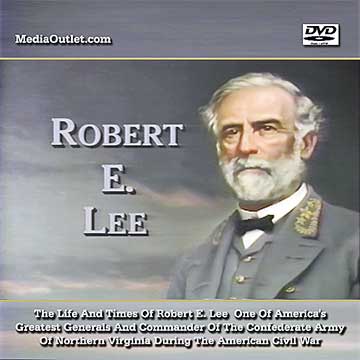
August 28-30, 1862: The American Civil
War (The Civil War, The War Between The States): The Eastern
Theater Of The American Civil War: The Second Battle Of Bull Run
(The Battle Of Second Manassas): -- The culmination of the
Northern Virginia Campaign begins in Prince William County,
Virginia, waged by Confederate Gen. Robert E. Lee's Army Of
Northern Virginia against Union Maj. Gen. John Pope's Army of
Virginia, a battle of much larger scale and numbers than that of
The First Battle Of Bull Run (or The Battle Of First Manassas)
fought on July 21, 1861 fought on the same ground. Following a
wide-ranging flanking march, Confederate Maj. Gen. Thomas J.
"Stonewall" Jackson captured the Union supply depot at
Manassas Junction, threatening Pope's line of communications with
Washington, D.C. Withdrawing a few miles to the northwest, Jackson
took up strong concealed defensive positions on Stony Ridge and
awaited the arrival of the wing of Lee's army commanded by Maj.
Gen. James Longstreet. On August 28, 1862, Jackson attacked a
Union column just east of Gainesville, at Brawner's Farm,
resulting in a stalemate but successfully getting Pope's
attention. On that same day, Longstreet broke through light Union
resistance led by General James B. Ricketts and Colonel Percy
Wyndham in the Battle of Thoroughfare Gap, also known as Chapman's
Mill, and approached the battlefield. Pope became convinced that
he had trapped Jackson and concentrated the bulk of his army
against him. On August 29, Pope launched a series of assaults
against Jackson's position along an unfinished railroad grade. The
attacks were repulsed with heavy casualties on both sides. At
noon, Longstreet arrived on the field from Thoroughfare Gap and
took position on Jackson's right flank. On August 30, Pope renewed
his attacks, seemingly unaware that Longstreet was on the field.
When massed Confederate artillery devastated a Union assault by
Maj. Gen. Fitz John Porter's V Corps, Longstreet's wing of 25,000
men in five divisions counterattacked in the largest simultaneous
mass assault of the war. The Union left flank was crushed and the
army was driven back to Bull Run. Only an effective Union rear
guard action prevented a replay of the First Manassas defeat.
Pope's retreat to Centreville was nonetheless precipitous. It was
a significant tactical victory for the Confederates and was
another blow to Union morale. Success in this battle emboldened
Lee to initiate the ensuing Maryland Campaign, Lee's first
invasion of the North. On Sale Until Midnight Tonight PT!
https://store.earthstation1.com/robert-e-lee-documentaries-dvd.html
Today's
EarthStation1.com 15% (Or More!) Off Commemorative Memorial Title:
The Battle Of Midway Documentaries Collection DVD, Download, USB
Drive
Today,August 28, 2026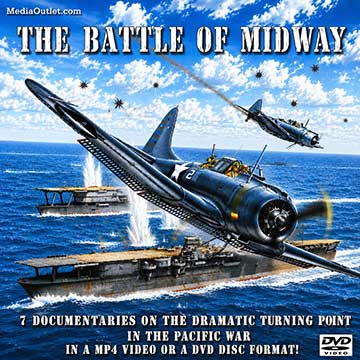
August 28, 1867: Imperialism: American
Imperialism: The History Of American Imperialism: American
Imperialism In The Pacific: -- The United States takes possession
of the (at this point unoccupied) Midway Atoll. Midway Atoll,
colloquially known as Midway Islands, is a 2.4-square-mile (6.2
km2) atoll in the North Pacific Ocean. Midway is roughly
equidistant between North America and Asia. Midway Atoll is an
unorganized, unincorporated territory of the United States. Midway
continues to be the only island in the Hawaiian archipelago that
is not part of the state of Hawaii. Unlike the other Hawaiian
islands, Midway observes Samoa Time (UTC-11:00, i.e., eleven hours
behind Coordinated Universal Time), which is one hour behind the
time in the state of Hawaii. For statistical purposes, Midway is
grouped as one of the United States Minor Outlying Islands. The
Midway Atoll National Wildlife Refuge, encompassing 590,991.50
acres (239,165.77 ha) of land and water in the surrounding area,
is administered by the United States Fish and Wildlife Service
(FWS). The refuge and most of its surrounding area are part of the
larger Papahanaumokuakea Marine National Monument. Until 1993, the
atoll was the home of the Naval Air Facility Midway Island. The
Battle of Midway, which was fought between June 4 and 6, 1942, was
one of the most important battles of the Pacific campaign of World
War II. The United States Navy defeated a Japanese battle group
marking a turning point in the war in the Pacific Theater. USAAF
aircraft based at the original Henderson Field on Eastern Island
joined the attack against the Japanese fleet, which suffered
losses of four carriers and one heavy cruiser. The airfield was
abandoned after the war. Approximately 40 to 60 people live on the
atoll, which includes staff of the U.S. Fish and Wildlife Service
and contract workers. Visitation to the atoll is possible only for
business reasons (which includes permanent and temporary staff,
contractors and volunteers) as the tourism program has been
suspended due to budget cutbacks. In 2012, the last year that the
visitor program was in operation, 332 people made the trip to
Midway. Tours focused on both the unique ecology of Midway as well
as its military history. The economy is derived solely from
governmental sources and tourist fees. Nearly all supplies must be
brought to the island by ship or plane, though a hydroponic
greenhouse and garden supply some fresh fruits and vegetables. On
Sale Until Midnight Tonight PT!
https://store.earthstation1.com/the-battle-of-midway-documentary-films-dual-layer-dvd.html
Today's
EarthStation1.com 15% (Or More!) Off Commemorative Memorial Title:
The Guns Of August (1964) WWI Film DVD, Video Download, USB Drive
Today,August 28, 2026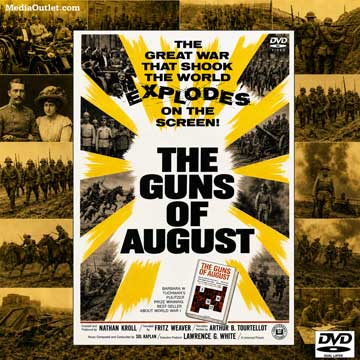
August 28, 1914: The European Civil War:
World War I: The First European War (The European Theater Of World
War I): The Guns Of August: The Western Front Of World War I: The
Siege Of Namur (1914) (French: Siege De Namur): -- German troops
take the city of Namur in Belgium, ending the Siege of Namur
(French: Siege de Namur). Namur was defended by a ring of modern
fortresses, known as the Fortified Position of Namur and guarded
by the Belgian 4th Division. When the siege began on August 20,
the German forces used experience gained at the Battle Of Liege
(August 4-16) and bombarded the forts using Big Bertha howitzers
(German: Dicke Bertha, lit. 'Fat (or heavy) Bertha'). the German
super-heavy siege artillery and four batteries on loan from
Austria-Hungary, before attacking with infantry. The French army
was defeated at the Battle Of Charleroi and managed to pass only
one regiment into Namur as a reinforcement. The forts were
destroyed by the bombardment, some being demolished by
conventional heavy artillery rather than the siege guns, due to
flaws in the concrete protection encasing the forts. The last of
the Belgian fortress troops were forced to surrender on August 25,
after the survivors of the Belgian 4th Division had withdrawn to
the south through the French Fifth Army and eventually joined the
Belgian field army at Antwerp during the siege. On Sale Until
Midnight Tonight PT!
https://store.earthstation1.com/the-guns-of-august-dvd-1964-world-war-i-movie-documen1964.html
Today's
EarthStation1.com 15% (Or More!) Off Commemorative Memorial Title:
The Great War (1964) TV Documentary Series DVD, Video Download,
USB
Today,August 28, 2026
August 28, 1914: The European Civil War:
World War I: The First European War (The European Theater Of World
War I): The Guns Of August: The Western Front Of World War I:
Naval Warfare Of World War I: The Battle Of Heligoland Bight
(1914): -- The Royal Navy defeats the Imperial German Navy in the
Battle Of Heligoland Bight, the first naval battle of the First
World War. Also known as The First Battle Of Heligoland Bight, it
took place in the south-eastern North Sea, when the British
attacked German patrols off the north-west German coast. The
German High Seas Fleet remained safe in harbour on the north
German coast while the British Grand Fleet remained in the
northern North Sea. Both sides engaged in long-distance sorties
with cruisers and battlecruisers, with close reconnaissance of the
area of sea near the German coast-the Heligoland Bight-by
destroyer. The British devised a plan to ambush German destroyers
on their daily patrols. A British flotilla of 31 destroyers and
two cruisers under Commodore Reginald Tyrwhitt, with submarines
commanded by Commodore Roger Keyes was dispatched. They were
supported at longer range by an additional six light cruisers
commanded by William Goodenough, and five battlecruisers commanded
by Vice Admiral David Beatty. Rear Admiral Franz von Hipper,
commander of a German battlecruiser squadron of 6 light cruisers
responsible for local defence, dispatched his forces to engage the
British. Three German light cruisers and one destroyer were sunk,
three light cruisers were damaged, 712 sailors killed, 530 injured
and 336 taken prisoner. Rear Admiral Leberecht Maass, the
Konteradmiral who commanded the German naval forces at the scene
of the battle, lost his life when his flagship, the light cruiser
SMS Coln, was sunk by British battlecruisers commanded by Vice
Admiral David Beatty.The British suffered one light cruiser and
three destroyers damaged, 35 killed and 40 wounded. The battle was
regarded as a great victory in Britain, where the returning ships
were met by cheering crowds. Publicly, Vice Admiral Beatty was
regarded as a hero, although he had taken little part in the
action or planning of the raid, which was led by Commodore
Tyrwhitt and conceived by him and Keyes, who had persuaded the
Admiralty to adopt it. The raid might have led to disaster had the
additional forces under Beatty not been sent by Admiral John
Jellicoe at the last minute. The effect upon the German government
and in particular the Kaiser, was to restrict the freedom of
action of the German fleet, instructing it to remain in port and
avoid any contact with superior forces for several months
thereafter. On Sale Until Midnight Tonight PT!
https://store.earthstation1.com/the-great-war-dvd-set-1964-wwi-tv-series-26-shows-1964266.html
Today's
EarthStation1.com 15% (Or More!) Off Commemorative Memorial Title:
World War I: The War Years Documentary Series DVD, Download, USB
Drive
Today,August 28, 2026
August 28, 1916: The European Civil War:
World War I: The First European War (The European Theater Of World
War I): The Eastern Front Of World War I: The German Declaration
Of War Against Romania: -- Germany declares war on Romania. The
Kingdom of Romania was neutral for the first two years of World
War I, entering on the side of the Allied powers from 27 August
1916 until Central Power occupation led to the Treaty of Bucharest
in May 1918, before reentering the war on 10 November 1918. It had
the most significant oil fields in Europe, and Germany eagerly
bought its petroleum, as well as food exports. King Carol favored
Germany but after his death in 1914, King Ferdinand and the
nation's political elite favored the Entente. For Romania, the
highest priority was taking Transylvania from Hungary, with its
3,000,000 Romanians. The Allies wanted Romania to join its side in
order to cut the rail communications between Germany and Turkey,
and to cut off Germany's oil supplies. Britain made loans, France
sent a military training mission, and Russia promised modern
munitions. The Allies promised at least 200,000 soldiers to defend
Romania against Bulgaria to the south, and help it invade Austria.
The Romanian campaign was part of the Balkan theatre of World War
I, with Romania and Russia allied with Britain and France against
the Central Powers of Germany, Austria, and Turkey. Fighting took
place from August 1916 to December 1917 across most of present-day
Romania, including Transylvania, which was part of the
Austro-Hungarian Empire at the time, as well as in southern
Dobruja, which is currently part of Bulgaria. Despite initial
successes, the Romanian forces (aided by Russia) suffered massive
setbacks, and by the end of 1916 only Moldavia remained. After
several defensive victories in 1917, with Russia's withdrawal from
the war following the October Revolution, Romania, almost
completely surrounded by the Central Powers, was also forced to
drop out of the war; it signed the Treaty of Bucharest with the
Central Powers in May 1918. On 10 November 1918, just one day
before the German armistice and after all the other Central Powers
had already capitulated, Romania re-entered the war after the
successful Allied advances on the Macedonian Front. On Sale Until
Midnight Tonight PT!
https://store.earthstation1.com/world-war-i-the-war-years-dvd-4-part-french-tv-serie4.html
Today's
EarthStation1.com 15% (Or More!) Off Commemorative Memorial Title:
World War 1 TV Series With Robert Ryan DVD, Video Download, USB
Drive
Today,August 28, 2026
August 28, 1916: World War I: The
European Theater Of World War I: Italy In World War I: The Italian
Declaration Of War Against Germany: Italy declares war on Germany.
Although a member of the Triple Alliance between Germany,
Austria-Hungary and Italy, the Kingdom of Italy did not join the
Central Powers, the German Empire and the Empire of
Austria-Hungary, when the war started on July 28. 1914. In fact,
Germany and Austria-Hungary had taken the offensive while the
Triple Alliance was supposed to be a defensive alliance. Moreover
the Triple Alliance recognized that both Italy and Austria-Hungary
were interested in the Balkans and required both to consult each
other before changing the status quo and to provide compensation
for whatever advantage in that area: Austria-Hungary did consult
Germany but not Italy before issuing the ultimatum to Serbia, and
refused any compensation before the end of the war. Almost a year
after the war's commencement, after secret parallel negotiations
with both sides (with the Allies in which Italy negotiated for
territory if victorious, and with the Central Powers to gain
territory if neutral) Italy entered the war on the side of the
Allied Powers. Italy began to fight against Austria-Hungary along
the northern border, including high up in the now-Italian Alps
with very cold winters and along the Isonzo river. The Italian
army repeatedly attacked, suffering heavy losses in the hundreds
of thousands of dead and making little progress as the mountainous
terrain favoured the defender. Italy was then forced to retreat in
1917 by a German-Austrian counteroffensive after Russia left the
war allowing the Central Powers to move reinforcements to the
Italian Front from the Eastern Front. The offensive of the Central
powers was stopped by Italy at the Battle of the Piave River in
May 1918. Italy took part in the second Battle Of The Marne and
the subsequent 100 days offensive in the Western Front. On
2October 4 1918 the Italians, despite being outnumbered, breached
the Austrian line in Vittorio Veneto and caused the collapse of
the centuries-old Habsburg Empire. Italy recovered the territory
lost after the disaster of Caporetto in November the previous year
and moved into Trento and South Tyrol. Fighting ended on 4
November 1918. Italian armed forces were also involved in the
Middle Eastern theatre of World War I and then took part in the
Occupation of Constantinople. At the end of World War I, Italy was
recognized a permanent seat in the League Of Nations' executive
council along with Britain, France and Japan. On Sale Until
Midnight Tonight PT!
https://store.earthstation1.com/world-war-1-robert-ryan-4-dual-layer-dvds-26-episode-tv-se1426.html
Today's
EarthStation1.com 15% (Or More!) Off Commemorative Memorial Title:
The Story Of Civilization: Will & Ariel Durant DVD, MP3
Download, USB
Today,August 28, 2026
August 28, 489: Rome: Ancient Rome: The
Roman Empire: The Western Roman Empire: The Roman-Germanic Wars:
The Battle Of Isonzo (489) (The Battle Of The Aesontius, The
Battle Of The Isontius): -- Theoderic The Great, King of the
Ostrogoths, defeats the King of Italy, Odoacer, forcing his way
into Italy. Also known as the Battle of the Aesontius, or the
Battle of the Isontius, it was fought on the banks of the Isontius
River, not far away from Aquileia at the head of the Adriatic Sea.
This river is now known as the Isonzo in Italian, and Soca in
Slovene. Theoderic The Great, often referred to as Theodoric, king
of the Ostrogoths (475-526), ruler of Italy (493-526), regent of
the Visigoths (511-526), and patrician (patricius) of the Roman
Empire (Byzantine Empire), in 489 opened his first campaign
against Odoacer to wrest Italy from him. On 28 August, the two
armies met on the banks of the Isontius. Theoderic defeated
Odoacer, who retreated. A second battle, the Battle of Verona
(489), was fought two days later at Verona. In 488, the Byzantine
Emperor Zeno ordered Theoderic to overthrow the German Foederatus
Odoacer, who had likewise been made patrician and even King of
Italy, but who had since betrayed Zeno, supporting the rebellious
Leontius. After a victorious three-year war, Theoderic killed
Odoacer with his own hands while they shared a meal, settled his
200,000 to 250,000 people in Italy, and founded an Ostrogothic
Kingdom based in Ravenna. While he promoted separation between the
Arian (Christian) Ostrogoths and the Roman population, Theoderic
stressed the importance of racial harmony, though intermarriage
was outlawed. Seeking to restore the glory of Ancient Rome, he
ruled Italy in its most peaceful and prosperous period since
Valentinian, until his death in 526. Memories of his reign made
him a hero of German legend as Dietrich von Bern. On Sale Until
Midnight Tonight PT!
https://store.earthstation1.com/story-of-civilization-will-amp-ariel-durant-mp3-dvd-11-audiobo311.html
Today's
EarthStation1.com 15% (Or More!) Off Commemorative Memorial Title:
Stalin 1990 TV Series + Bonus WWII Culpability MP4 Video Download
DVD
Today,August 28, 2026
August 28, 1924: The Aftermath Of World
War I: 20th Century Revolutions: The Interwar Period (The
Interbellum, Between The Wars): Georgia: The History Of Georgia:
Anti-Bolshevik Uprisings: Rebellions Against The Soviet Union: The
August Uprising (Georgian: Agvist'os Ajanq'eba): -- The Committee
For The Independence Of Georgia, a bloc of anti-Soviet political
organisations chaired by the Georgian Social Democratic
(Menshevik) Party, stages the August Uprising, an unsuccessful
insurrection against Soviet rule in the Georgian Soviet Socialist
Republic from late August to early September 1924, aimed at
restoring the independence of Georgia from the Soviet Union. It
represented the culmination of a three-year struggle against the
Bolshevik regime that Soviet Russia's Red Army had established in
Georgia during a military campaign against the Democratic Republic
Of Georgia known as The Red Army Invasion Of Georgia (The
Soviet-Georgian War, The Soviet Invasion Of Georgia) (February 15
- March 17, 1921), a military campaign by the Soviet Russian
(RSFSR) Red Army aimed at defeating the Georgian rebels known as
"Oath of Fealty", overthrowing the Social-Democratic
(Menshevik) government of the Democratic Republic Of Georgia (DRG)
and installing a Bolshevik regime in the country. The Red Army and
Cheka troops, under orders of the Georgian Bolsheviks Joseph
Stalin and Sergo Ordzhonikidze, suppressed the August Uprising and
instigated a wave of mass repressions that killed several thousand
citizens of Georgia. The August uprising proved one of the last
major rebellions against the early Soviet government, and its
defeat marked a definitive establishment of Soviet rule in
Georgia. On Sale Until Midnight Tonight PT!
https://store.earthstation1.com/stalin-1990-tv-series-plus-bonus-wwii-culpability-mp4-video-download-dvd.html
Today's
EarthStation1.com 15% (Or More!) Off Commemorative Memorial Title:
Amos 'N' Andy Radio Shows MP3 Set DVD, Download, USB Flash Drive
Today,August 28, 2026
August 28, 1899: #BOTD: #HBD! Charles
Boyer, French-American actor, singer, and producer (d. August 26,
1978) is #born in Figeac, Lot, France; his surname comes from
"boier", the Occitan word for "cowherd". After
receiving an education in drama, Boyer started on the stage, but
he found his success in American films during the 1930s. His
memorable performances were among the era's most highly praised,
in romantic dramas such as The Garden of Allah (1936), Algiers
(1938), and Love Affair (1939), as well as the mystery-thriller
Gaslight (1944). He received four Oscar nominations for Best
Actor. Charles Boyer appeared in more than 80 films between 1920
and 1976. Charles Boyer died of a broken heart by suicide when,
overcome with grief over the death of his beautiful wife, English
actress Pat Paterson, of cancer two days prior, he took an
overdose of seconal while at a friend's home in Scottsdale,
Arizona. He was taken to the hospital in Phoenix, Arizona, where
he died, two days before his own 79th birthday. He is interred in
Holy Cross Cemetery, Culver City, California, alongside his wife
and son Michael Charles Boyer, the latter having shot himself in
the right temple after his girlfriend Marilyn Campbell told him
she did not want to see him again. On Sale Until Midnight Tonight
PT!
https://store.earthstation1.com/amos-39n39-andy-radio-mp3-dvd-complete-broad39393.html
Today's
EarthStation1.com 15% (Or More!) Off Commemorative Memorial Title:
Color Adjustment 40 Years Of Black America On Broadcast TV DVD MP4
USB
Today,August 28, 2026
August 28, 1929: #BOTD: #HBD! Roxie
Roker, African American actress, best known for playing Helen
Willis on the CBS sitcom The Jeffersons (1975-1985), half of the
first interracial couple ever to be shown on regular prime time
television, a role which paralleled her real life interracial
marriage to the NBC television news producer of Russian Jewish
ancestry Sy Kravitz (d. December 2, 1995) is #born Roxie Albertha
Roker in Miami, Florida. Roxie Roker was the cousin of television
weather presenter Al Roker, mother of rock musician Lenny Kravitz
and paternal grandmother of actress Zoe Kravitz. Roxie Roker died
in Los Angeles, California of breast cancer, aged 66. She is
buried at Southern Memorial Park cemetary in North Miami, Florida.
On Sale Until Midnight Tonight PT!
https://store.earthstation1.com/color-adjustment-40-years-of-black-americans-on-tv-dvd-download-u40.html
Today's
EarthStation1.com #OnThisDay Commemorative Memorial Title:
11-22-63: The Day The Nation Cried John F. Kennedy DVD, MP4, USB
Drive
Today,August 28, 2026 August 28: National Bow Tie Day: -- The
one and only holiday dedicated to everyone's favorite underrated
accessory! It's the perfect day to dig out your favorite bow tie
and parade it around town to show everyone just how dapper and
sophisticated you are! Even if you pair it with jeans, you're sure
to look top-notch while wearing such a statement accessory. So,
today, we celebrate these classic fashion devices and all the
people that regularly choose to wear them. Since time immemorial,
or at least since the 19th century, the bow tie has been the
epitome of class, elegance, and that certain panache of the
social- and intellectual upper echelons. Whether you were of high
social stature by birth or renowned in intellectual circles for
your wit and prowess, the bow tie told the world of this. Well,
maybe not quite that excessive. But the bow tie has, since its
humble origins, become a symbol of status and stature in many
social circles. Interestingly enough, the first inclinations of a
bow tie were actually worn by Croatian mercenaries during the
Thirty Years War in the 17th century. The soldiers needed neckties
that mirrored scarf knots. Of course, the French, taking a cue
from this relatively fringe and scandalous source, popularized the
trend in Paris before it spread throughout the rest of the
fashion-aware world. From then, the bow tie would become an
important part of formal dress, and especially popular amongst
medical and doctoral doctors. Eventually, the tie's popularity
would wear off (pun intended) during WWII due to the shortage of
materials to make them and people to wear them. However, it's no
secret that the bow tie has survived in circles of ballet
attendees and Bond villains alike. Today, the bow tie can be seen
at black-tie affairs and, ironically, on hipsters, alike. National
Bow Tie day is thus the celebration of all of the history and
symbolism tightly packed into a pristine knot.
https://store.earthstation1.com/112263-the-day-the-nation-cried-john-f-kennedy--dvd-1122634.html
August 28: National Bow Tie Day: -- The
one and only holiday dedicated to everyone's favorite underrated
accessory! It's the perfect day to dig out your favorite bow tie
and parade it around town to show everyone just how dapper and
sophisticated you are! Even if you pair it with jeans, you're sure
to look top-notch while wearing such a statement accessory. So,
today, we celebrate these classic fashion devices and all the
people that regularly choose to wear them. Since time immemorial,
or at least since the 19th century, the bow tie has been the
epitome of class, elegance, and that certain panache of the
social- and intellectual upper echelons. Whether you were of high
social stature by birth or renowned in intellectual circles for
your wit and prowess, the bow tie told the world of this. Well,
maybe not quite that excessive. But the bow tie has, since its
humble origins, become a symbol of status and stature in many
social circles. Interestingly enough, the first inclinations of a
bow tie were actually worn by Croatian mercenaries during the
Thirty Years War in the 17th century. The soldiers needed neckties
that mirrored scarf knots. Of course, the French, taking a cue
from this relatively fringe and scandalous source, popularized the
trend in Paris before it spread throughout the rest of the
fashion-aware world. From then, the bow tie would become an
important part of formal dress, and especially popular amongst
medical and doctoral doctors. Eventually, the tie's popularity
would wear off (pun intended) during WWII due to the shortage of
materials to make them and people to wear them. However, it's no
secret that the bow tie has survived in circles of ballet
attendees and Bond villains alike. Today, the bow tie can be seen
at black-tie affairs and, ironically, on hipsters, alike. National
Bow Tie day is thus the celebration of all of the history and
symbolism tightly packed into a pristine knot.
https://store.earthstation1.com/112263-the-day-the-nation-cried-john-f-kennedy--dvd-1122634.html
Today's
EarthStation1.com #OnThisDay Commemorative Memorial Title: Battle
Of San Pietro + Winning The War On Film WWII DVD, Download, USB
Today,August 28, 2026August 28, 1987: #DOTD: #RIP: John
Huston, Irish-American film director, screenwriter and actor (b.
August 5, 1906) #dies in his rented home in Middletown, Rhode
Island, from pneumonia as a complication of lung disease caused by
heavy smoking, aged 81. Huston is interred in the Hollywood
Forever Cemetery in Hollywood with his mother, Rhea. John Huston
was born John Marcellus Huston in Nevada, Missouri; he later
renounced U.S. citizenship to become an Irish citizen and
resident. He returned to reside in the United States where he
died. He wrote the screenplays for most of the 37 feature films he
directed, many of which are today considered classics: The Maltese
Falcon (1941), The Treasure of the Sierra Madre (1948), The
Asphalt Jungle (1950), The African Queen (1951), The Misfits
(1961), Fat City (1972) and The Man Who Would Be King (1975).
During his 46-year career, Huston received 15 Oscar nominations,
won twice, and directed both his father, Walter Huston, and
daughter, Anjelica Huston, to Oscar wins in different films.
Huston was known to direct with the vision of an artist, having
studied and worked as a fine art painter in Paris in his early
years. He continued to explore the visual aspects of his films
throughout his career: sketching each scene on paper beforehand,
then carefully framing his characters during the shooting. While
most directors rely on post-production editing to shape their
final work, Huston instead created his films while they were being
shot, making them both more economical and cerebral, with little
editing needed. Most of Huston's films were adaptations of
important novels, often depicting a "heroic quest," as
in Moby Dick, or The Red Badge of Courage. In many films,
different groups of people, while struggling toward a common goal,
would become doomed, forming "destructive alliances,"
giving the films a dramatic and visual tension. Many of his films
involved themes such as religion, meaning, truth, freedom,
psychology, colonialism and war. Before becoming a Hollywood
filmmaker, he had been an amateur boxer, reporter, short-story
writer, portrait artist in Paris, a cavalry rider in Mexico, and a
documentary filmmaker during World War II. Huston has been
referred to as "a titan", "a rebel", and a
"renaissance man" in the Hollywood film industry. Author
Ian Freer describes him as "cinema's Ernest Hemingway"-a
filmmaker who was "never afraid to tackle tough issues head
on."
https://store.earthstation1.com/john-huston-wwii-films-battle-of-san-pietro-december-7th-dv7.html
Today's
EarthStation1.com #OnThisDay Commemorative Memorial Title: The
Divided Union: American Civil War TV Series DVD, MP4, USB Drive
Today,August 28, 2026August 28, 1861: The American Civil War
(The Civil War, The War Between The States): The Eastern Theater
Of The American Civil War: Naval Warfare Of The American Civil War
(Naval Battles Of The American Civil War): The Battle Of Hatteras
Inlet Batteries (The Battle Of Forts Hatteras And Clark): -- Union
forces attack Cape Hatteras, North Carolina in the two-day-long
Battle of Hatteras Inlet Batteries in the first combined operation
of the Union Army and Navy in the American Civil War, resulting in
Union domination of the strategically important North Carolina
Sounds. Two forts on the Outer Banks (Fort Clark and Fort
Hatteras) had been built by the Confederates to protect their
commerce-raiding activity. But these were lightly-defended, and
their artillery could not engage the bombarding fleet under Flag
Officer Silas H. Stringham, commandant of the Atlantic Blockading
Squadron, which had been ordered to keep moving, to avoid
presenting a static target. Although held up by bad weather, the
fleet was able to land troops under General Ben Butler, who took
the surrender of Flag Officer Samuel Barron. This battle
represented the first application of the naval blockading
strategy. The Union retained both forts, providing valuable access
to the sounds, and commerce raiding was much reduced. The victory
was welcomed by a demoralised Northern public after the
humiliation of the Union defeat at The First Battle Of Bull Run of
July 21.
https://store.earthstation1.com/the-divided-union-american-civil-war-tv-series-3-dual-layer-dvd3.html
Today's
EarthStation1.com #OnThisDay Commemorative Memorial Title: The
Gulf Crisis: The Road To War TV Series + Bonus 2 DVDs MP4 Download
Today,August 28, 2026August 28, 1990: The Aftermath Of World
War II: The Cold War: The Cold War (1985-1991) (The End Of The
Cold War): The Gulf War (The Persian Gulf War, Gulf War I): The
Invasion Of Kuwait: -- Kuwait is formally annexed by Iraq. The
Invasion Of Kuwait by Iraq began shortly after midnight local time
on August 2, 1990, when about 100,000 Iraqi troops invaded Kuwait
amid claims that Kuwait threatened Iraq's economic existence by
overproducing oil and driving prices down on the world market.
Also on August 2, 1990, United Nations Security Council Resolution
660 was issued by he United Nations Security Council (UNSC)
condemning the Iraqi Invasion Of Kuwait and demanding that Iraq
withdraw immediately and unconditionally to positions as they were
on August 1, 1990. It was the first of twelve resolutions on the
conflict passed in 1990. On July 31, Egypt and Saudi Arabia
attempted to mediate between the two countries with a meeting on
meeting between Iraq and Kuwait in Jeddah, Saudi Arabia. Iraq
clearly stated on this occasion that it would not use armed forces
against neighboring countries. However, at dawn on August 2, the
Iraqi army that was amassed near the border suddenly invaded
Kuwait. On July 24, 1990, President of Egypt Hosni Mubarak
traveled to Baghdad to meet with Saddam Hussein and discuss the
dispute between Kuwait and Iraq, to no avail. On July 22, 1990,
Iraq began deploying troops to the Iraqi-Kuwaiti border, creating
a massive military buildup in preparation for what would become
the Iraqi Invasion Of Kuwait, which ultimately resultd in the Gulf
War (Gulf War I). Iraq accused Kuwait onn July 15, 1990 of
stealing oil from the Rumaila oil field, an Iraqi oil field near
the Iraqi-Kuwaiti border, and threatened military action in
response. In 1988 Iraq's Oil Minister, Issam al-Chalabi, stressed
a further reduction in the crude oil production quota of
Organization of the Petroleum Exporting Countries (OPEC) members
so as to end the 1980s oil glut. Chalabi argued that higher oil
prices would help Iraq increase its revenues and pay back its 60B
USD debt. However, given its large downstream petroleum industry,
Kuwait was less concerned about the prices of crude oil and in
1989, Kuwait requested OPEC to increase the country's total oil
production ceiling by 50% to 1.35 million bpd. Throughout much of
the 1980s, Kuwait's oil production was considerably above its
mandatory OPEC quota and this had prevented a further increase in
crude oil prices. A lack of consensus among OPEC members
undermined Iraq's efforts to end the oil glut and consequently
prevented the recovery of its war-crippled economy. According to
former Iraqi Foreign Minister Tariq Aziz, "every 1 USD drop
in the price of a barrel of oil caused a 1B USD drop in Iraq's
annual revenues triggering an acute financial crisis in Baghdad".
Kuwait's refusal to decrease its oil production was viewed by Iraq
as an act of aggression against it. The increasingly tense
relations between Iraq and Kuwait were further aggravated when
Iraq alleged that Kuwait was slant-drilling across the border into
Iraq's Rumaila field. The dispute over Rumaila field started in
1960 when an Arab League declaration marked the Iraq-Kuwait border
2 miles north of the southernmost tip of the Rumaila field. During
the Iran-Iraq War, Iraqi oil drilling operations in Rumaila
declined while Kuwait's operations increased. In 1989, Iraq
accused Kuwait of using "advanced drilling techniques"
to exploit oil from its share of the Rumaila field. Iraq estimated
that 2.4B USD worth of Iraqi oil was "stolen" by Kuwait
and demanded compensation. Kuwait dismissed the accusations as a
false Iraqi ploy to justify military action against it. Several
foreign firms working in the Rumaila field also dismissed Iraq's
slant-drilling claims as a "smokescreen to disguise Iraq's
more ambitious intentions". On July 25, 1990, only a few days
before the Iraqi invasion, OPEC officials said that Kuwait and the
United Arab Emirates had agreed to a proposal to limit daily oil
output to 1.5 million barrels, thus potentially settling
differences over oil policy between Kuwait and Iraq. At the time
of the settlement, more than 100,000 Iraqi troops were deployed
along the Iraq-Kuwait border, and American officials expressed
little indication of decline in tensions despite the OPEC
settlement.
https://store.earthstation1.com/the-gulf-crisis-the-road-to-war-tv-documentary-series-dvd-mp4-us4.html
Today's
EarthStation1.com #OnThisDay Commemorative Memorial Title: The
Buster Keaton Story 1957 Donald O'Connor Ann Blyth DVD, MP4, USB
Today,August 28, 2026August 28, 1925: #BOTD: #HBD! Donald
O'Connor, American actor, singer, and dancer (d. September 27,
2003) #born Donald David Dixon Ronald O'Connor to Vaudevillians
Edward "Chuck" O'Connor and Effie Irene (nee Crane) as
the 200th child born at St. Elizabeth Hospital in Chicago,
Illinois there. He came to fame in a series of films in which he
co-starred alternately with Gloria Jean, Peggy Ryan, and Francis
the Talking Mule. His best-known work was his "Make 'Em
Laugh" dance routine in Singin' In The Rain (1952) for which
role O'Connor was awarded a Golden Globe. He also won a Primetime
Emmy Award from four nominations and received two stars on the
Hollywood Walk of Fame throughout his career. As a child he
learned to dance, sing, play comedy and slapstick from his
vaudeville family. The most distinctive characteristic of his
dancing style was its athleticism, for which he had few rivals.
Yet it was his boyish charm that audiences found most engaging,
and which remained an appealing aspect of his personality
throughout his career. In his early Universal films, O'Connor
closely mimicked the smart alec, fast-talking personality of
Mickey Rooney of rival MGM Studio. For Singin' In The Rain,
however, MGM cultivated a much more sympathetic sidekick persona,
and that remained O'Connor's signature image. Donald O'Connor died
of complications from heart failure at age 78 at the Motion
Picture & Television Country House and Hospital, in Woodland
Hills, California. His remains were cremated, and his belongings
were auctioned off and all proceeds were given to charity.
https://store.earthstation1.com/the-buster-keaton-story-dvd-1957-donald-o39195739.html
Today's
EarthStation1.com #OnThisDay Commemorative Memorial Title:
Dinosaur Documentaries MP4 Video Download 2 DVD Set
Today,August 28, 2026August 28, 1930: #BOTD: #HBD! Ben
Gazzara, American actor and director of film, stage, and
television (d. February 3, 2012) is #born Biagio Anthony Gazzara
to Sicilian immigrants in New York City in a monolingual,
Italian-speaking household; he did not learn English until he went
to school. Ben Gazarra received numerous accolades, including a
Primetime Emmy Award and a Drama Desk Award, in addition to
nominations for three Golden Globe Awards and three Tony Awards.
Gazzara studied at The New School and began his professional
career with the Actors Studio, of which he was a lifelong member.
His breakthrough role was in the Broadway play Cat on a Hot Tin
Roof (1955-56), which earned him widespread acclaim. A memorable
performance as a soldier on trial for murder in Otto Preminger's
Anatomy of a Murder (1959) transitioned Gazzara to an equally
successful screen career. As the star of the television series Run
for Your Life (1965-1968), he was nominated for three Golden Globe
Awards and two Emmy Awards. He won his only Emmy Award for the
television film Hysterical Blindness (2002). He was a recurring
collaborator of John Cassavetes, working with him on Husbands
(1970), The Killing of a Chinese Bookie (1976) and Opening Night
(1977). His other best-known films include The Bridge at Remagen
(1969), Capone (1975), Voyage of the Damned (1976), Saint Jack
(1979), Road House (1989), The Spanish Prisoner (1997), The Big
Lebowski, Buffalo '66, Happiness (all 1998), The Thomas Crown
Affair, Summer of Sam (both 1999), Dogville (2003) and Paris, je
t'aime (2006). He also had a successful and prolific film career
in Europe, particularly Italy, where he worked with eminent
directors such as Giuseppe Tornatore, Giuliano Montaldo, Marco
Ferreri, and Lars von Trier. Gazzara was known for his gritty,
naturalistic portrayals of intense, often amoral characters.
According to The Hollywood Reporter, "Gazzara positioned
himself for 'creative elbow room,' seeking edgy characters in
non-mainstream productions or infusing mainstream productions with
idiosyncratic supporting turns." Ben Gazzara died of
pancreatic cancer at Bellevue Hospital Center in New York City.
His remains cremated and given to his beautiful wife of thirty
years, model Elke Krivat.
https://store.earthstation1.com/didomp4vido2.html
Today's
EarthStation1.com #OnThisDay Commemorative Memorial Title: Women's
Rights Women's Suffrage The Women's Movement MP4 Download DVD
Today,August 28, 2026August 28, 1917: Feminism: The Feminist
Movement (The Women's Movement): Women's Suffrage In The United
States: The Silent Sentinels (The Sentinels Of Liberty): -- Ten
suffragettes are arrested while picketing the White House after a
peaceful but intentionally provocative suffragette campaign all
that year waged beside the White House to force President Woodrow
Wilson to support the Anthony amendment to the Constitution that
guaranteed women the right to vote. Women started demontrating in
front of the White House for women's suffrage, beginning January
1917. The women wanted President Woodrow Wilson to support the
proposed Anthony amendment to the Constitution, which would
guarantee women the right to vote. They started off standing
silently, holding picket signs reading, "Mr. President, what
will you do for Woman Suffrage?" and "How Long Must
Women Wait for Liberty?" Riding through the White House
gates, his wife by his side, President Wilson customarily tipped
his hat to the protestors. Between June and November 1917, 218
protestors from 26 states were arrested and charged with
"obstructing sidewalk traffic" outside the White House
gates. During that time, messages on the picket signs became more
demanding. The women took advantage of the United States' entry
into World War I on April 6. When Russian envoys came through
Washington, posters proclaimed that the United States was a
democracy in name only. Bystanders erupted in violence. The leader
of the National Woman's Party, Alice Paul, staged a hunger strike
in jail after her arrest. Prison doctors had to force-feed her and
others. With all the pressure from publicity generated by the
White House pickets, the arrests and forced-feedings of women
protestors, President Wilson finally lent his support to the
suffrage amendment in January 1918. Congress approved it, and on
August 18, 1920, with the ratification of the Nineteenth
Amendment, women achieved the right to vote. That date is now
commemorated as Women's Equality Day.
https://store.earthstation1.com/women39s-suffrage-amp-the-women39s-movement-dvd-mp4-usb-39394.html
Today's
EarthStation1.com #OnThisDay Commemorative Memorial Title: Raymond
Massey: Actor Of The Century DVD, Video Download, USB Drive
Today,August 28, 2026August 28, 1985: #DOTD: #RIP: Ruth
Gordon, American actress, playwright and screenwriter (b. October
30, 1896) #dies at her summer home in Edgartown, Massachusetts,
following a stroke at age 88. Her husband for 43 years, Garson
Kanin, was at her side and said that even her last day of life was
typically full, with walks, talks, errands, and a morning of work
on a new play. Her remains were cremated, and the ashes were given
to her widow Garson Kanin. She had made her last public appearance
two weeks before at a benefit showing of the film Harold and
Maude, and had recently finished acting in four films. In August
1979, a small movie theater in Westboro, Massachusetts, was named
the Ruth Gordon Flick. She attended the opening ceremony, standing
on a bench in the lobby so she could be seen. The theater no
longer exists. In November 1984, the outdoor amphitheater in
Merrymount Park in Quincy, Massachusetts, was named Ruth Gordon
Amphitheater in her honor. Ruth Gordon was born Ruth Gordon Jones
in Quincy, Massachusetts. She began her career performing on
Broadway at age 19. Known for her nasal voice and distinctive
personality, Gordon gained international recognition and critical
acclaim for film roles that continued into her 70s and 80s. Her
later work included performances in Rosemary's Baby (1968), What
Ever Happened to Aunt Alice? (1969), Where's Poppa? (1970), Harold
and Maude (1971), Every Which Way But Loose (1978), Any Which Way
You Can (1980), and My Bodyguard (1980). In addition to her acting
career, Gordon wrote numerous plays, film scripts, and books, most
notably co-writing the screenplay for the 1949 film Adam's Rib.
Gordon won an Academy Award, a Primetime Emmy, and two Golden
Globe Awards for her acting, as well as three Academy Award
nominations for her writing. Raymond Massey's high-profile
estrangement and divorce from his second wife Adrianne Allen was
the inspiration for Ruth Gordon's and Garson Kanin's script for
the film Adam's Rib (1949), starring Katharine Hepburn and Spencer
Tracy, and indeed Massey married the lawyer who represented him in
court, Dorothy Whitney, while his then former wife, Allen, married
the opposing lawyer, William Dwight Whitney.
https://store.earthstation1.com/raymond-massey-actor-of-the-century-dvdhtm.html